
The Camera Never Blinks
With apologies to Dan Rather.

Recently, at work, we came across a box of projection lenses that had been lost in the shuffle. We were supposed to auction these off last year, but they were stuck in a corner and forgotten about.
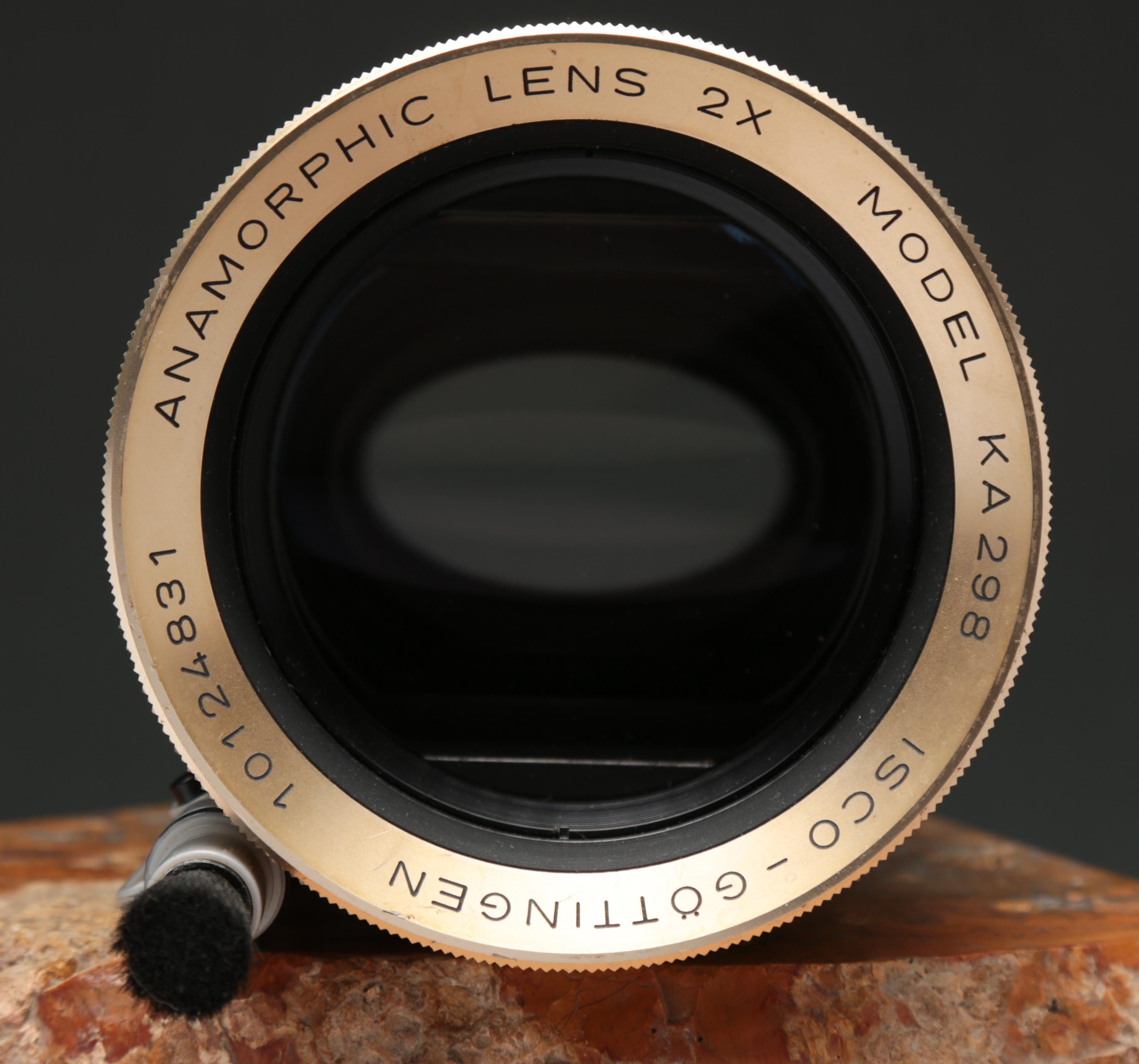
When I say, “Projection” lenses, I mean that these lenses are for movie projection systems: professional movie projection systems. This particular lens is from a German optics company, ISCO-Gottigen. They made optics for cameras before WWII, and primarily cinema lenses after the war.
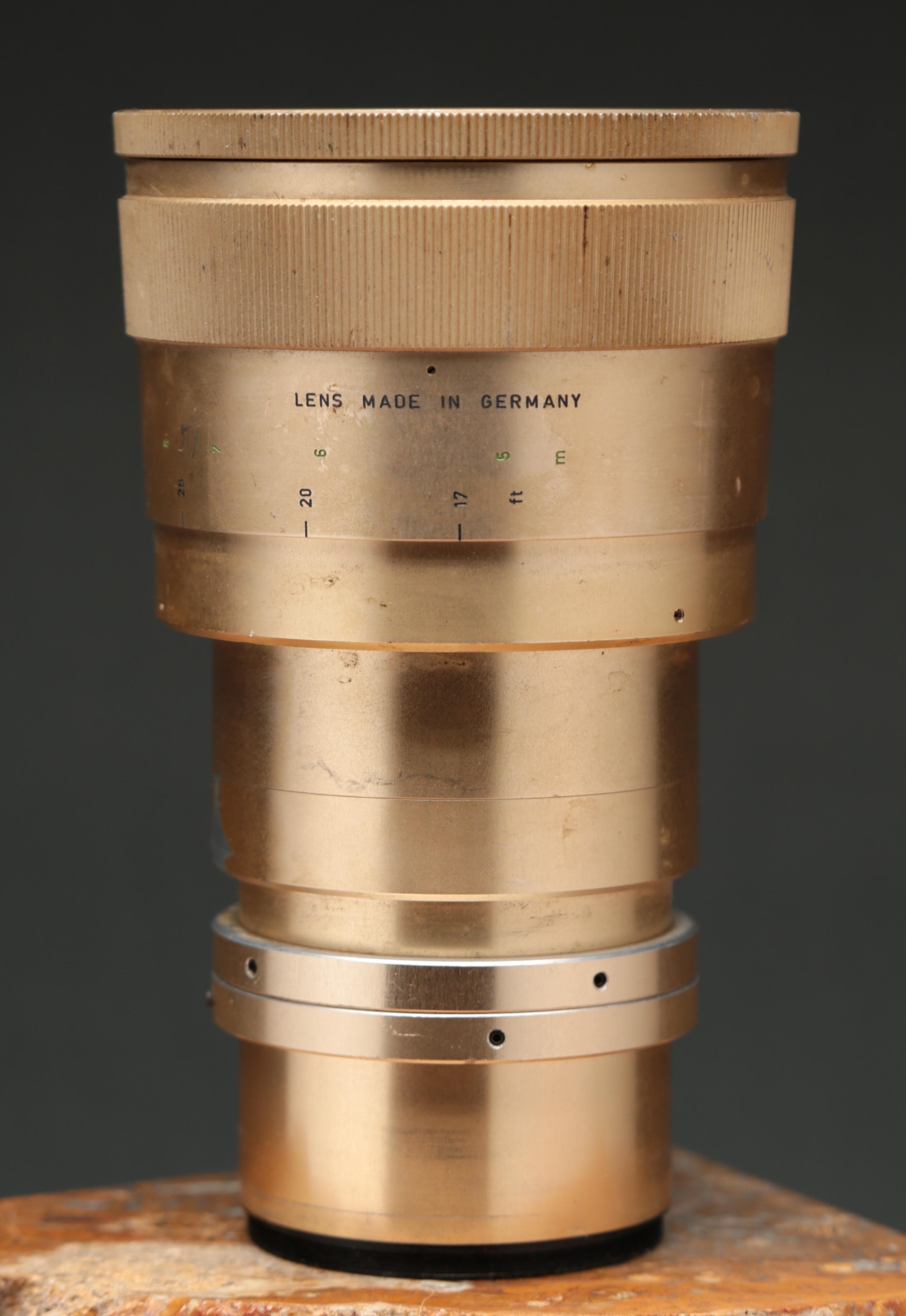
This lens is a beast!. It is just over 7 inches tall and it weighs at least three pounds. The lens barrel is made from solid brass.
This lens is even bigger!
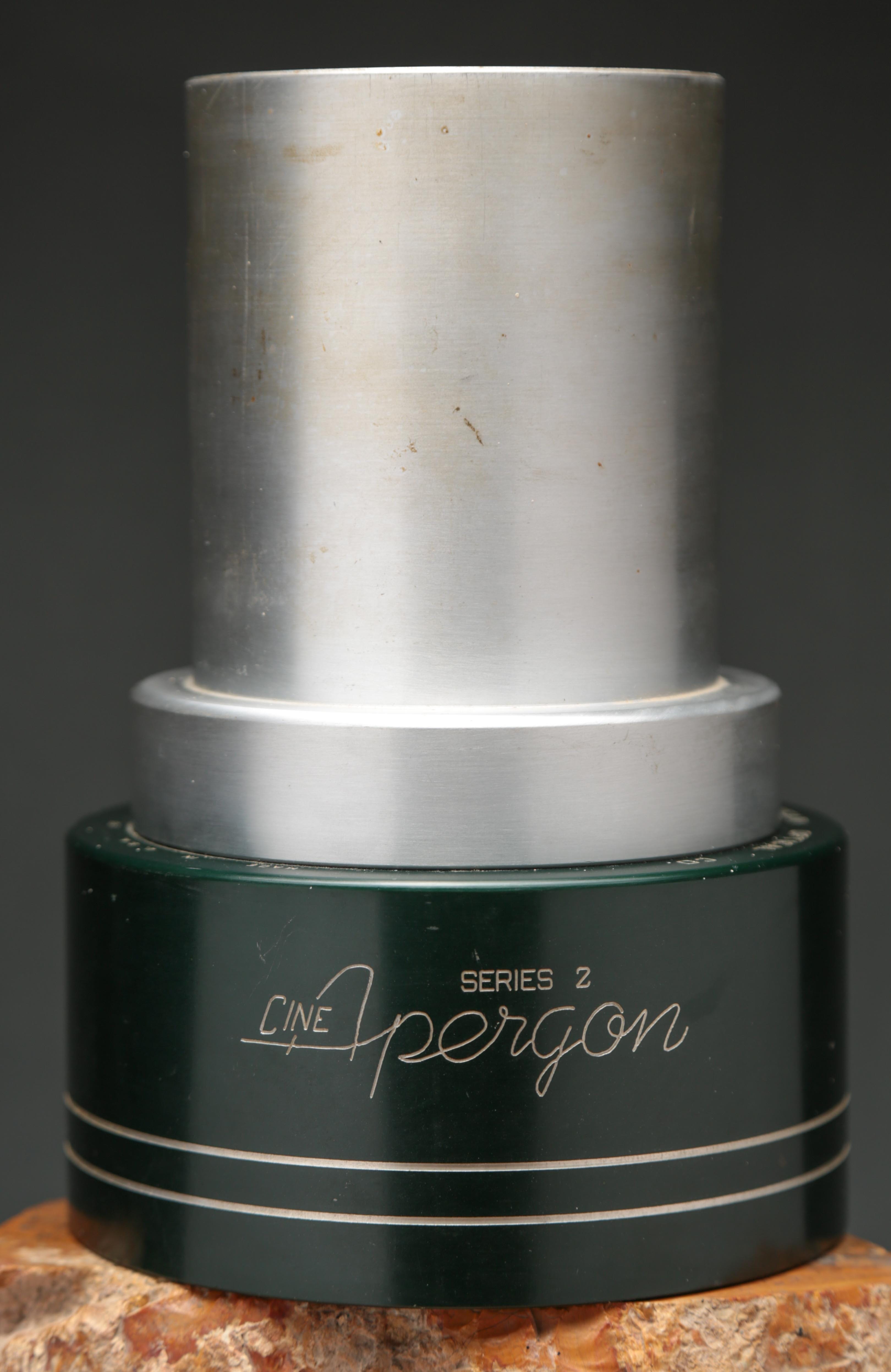
This is the American Optical 70mm Cine Apergon projection lens. It was made by the American Optical Company, in conjunction with Todd Cinema, and United Artists Theaters. The lens went with the Todd-AO system, which used a 70mm film stock and projected on a widescreen, The system was created back in the 50’s as part of the widescreen craze that had developed. There was “Cinema-Scope”, “Cinerama”, and maybe one or two other processes. This lens was made for that style of movie projection. The projection machine was about the size of a full-sized pickup.


You will notice that these four lenses seem to have squashed lenses, this is because they are “Anamorphic” lenses. When shooting movies, an anamorphic lens keeps the center in focus, but drastically blows out the focus of just about everything else. There is also a tendency to squeeze the frame from top to bottom. When you think of a classic “Cinematic” look, it’s probably the effect of an anamorphic lens that you are thinking about. I can only imagine that an anamorphic projection lens is somehow necessary to get the most out of your film, if it was also shot with an anamorphic lens. To be honest, I am not well versed in the development and use of projection lenses.
Which brings up the question, “What can people do with these lenses if they are not using them to project movies”?
I’m glad you asked.
I will admit that I did not realize that there was a sub-section of the photography community who retrofit these lenses for use in still photography, but there is, and they do. After seeing what they can do, I am thinking about bidding on one of these lenses and having it retrofit to one of my medium format cameras.


What I found interesting about these projection lenses was, I could find almost no information regarding their build and composition. Certainly plenty of places where I could get info about converting these lenses for photography, but nothing about the glass, the way they are shaped or how how many pieces of glass were inside, or how they were grouped. In modern lenses, you can find granular detail about lens design and how they are made, but not these projection lenses.


There are many websites and online forums dedicated to the use of these lenses for photography, and some of them are pretty cool. As photographers are want to do, they can get really geeky about the technical aspects of their lenses, how they were converted for use, what cameras they shoot them on, and what films stocks they have used. I can sometimes find that sort of detail interesting, but I really like to see the results, and, at first, those examples were quite spotty.
In fact, I was originally perplexed as to why anyone would want to spend the time, or money, to convert one of these lenses, the pictures were not that good. The first several websites that I visited, where shooters would post their results, showed less than beautiful pictures. Joe-The-Photographer, would post a series of pictures he took of his kids at the local park, give information about his rig and his settings, and the responses were glowing. Other photographers would rave about the colors, the bokeh, the look of the glass compared to something that they had shot last year, etc., I saw crap.
The kids were ugly, the shot was way out of focus, the bokeh was hard to look at, and the settings overexposed the film. I am all for positive feedback, and not busting a guy’s chops when he’s trying his best, but c’mon! Then, I began to see other shooter’s work, folks who had a better handle on their gear; the results were very impressive.
The allure of these lenses comes from the unique looks that they can give the shooter. They are sophisticated lenses, but they are fundamentally different than modern lenses, and that makes all the difference.
Modern lenses are marvelous technological achievements. Manufactured and assembled to a degree of precision that was unbelievable 100 years ago, they are nearly perfect for taking pictures. They have electronic assist, multiple coatings of super-secrete materials that remove chromatic aberrations and even lens flare, these projection lenses do not, which is the whole point.
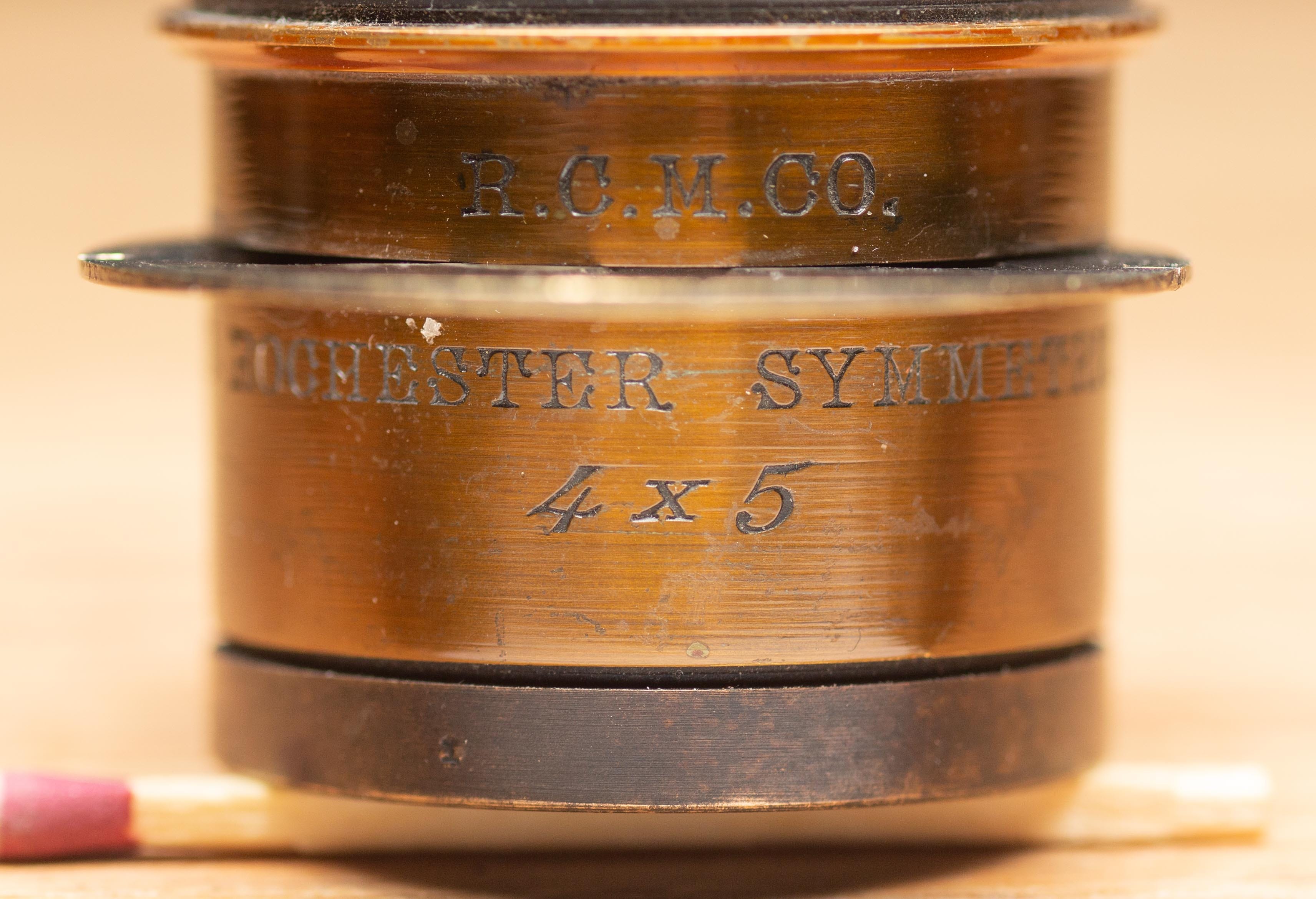
This lens is over 100 years old. It was made by the Rochester Camera Manufacturing Company, of Rochester, New York. In America, Rochester, was the center of the photographic universe in the 19th and early 20th Centuries. The R.C.M., made large format “View” cameras (the kind you’d think of where the photographer would duck under a black cloak to focus his camera), and this was a lens for the company’s 4X5 camera.


The lens is made of brass and glass, nothing else. There is a glass element on the front, the back, with perhaps a second lens element paired with the front, but I forget. The entire assembly could be disassembled into its component pieces. That ring that you see, with the holes, is the sum total of the aperture system; you turn the wheel to adjust aperture!
While the projection lenses are more optically sophisticated, they are essentially the same thing that you see in this 100+ year old lens: a brass tube, with clear glass inside.
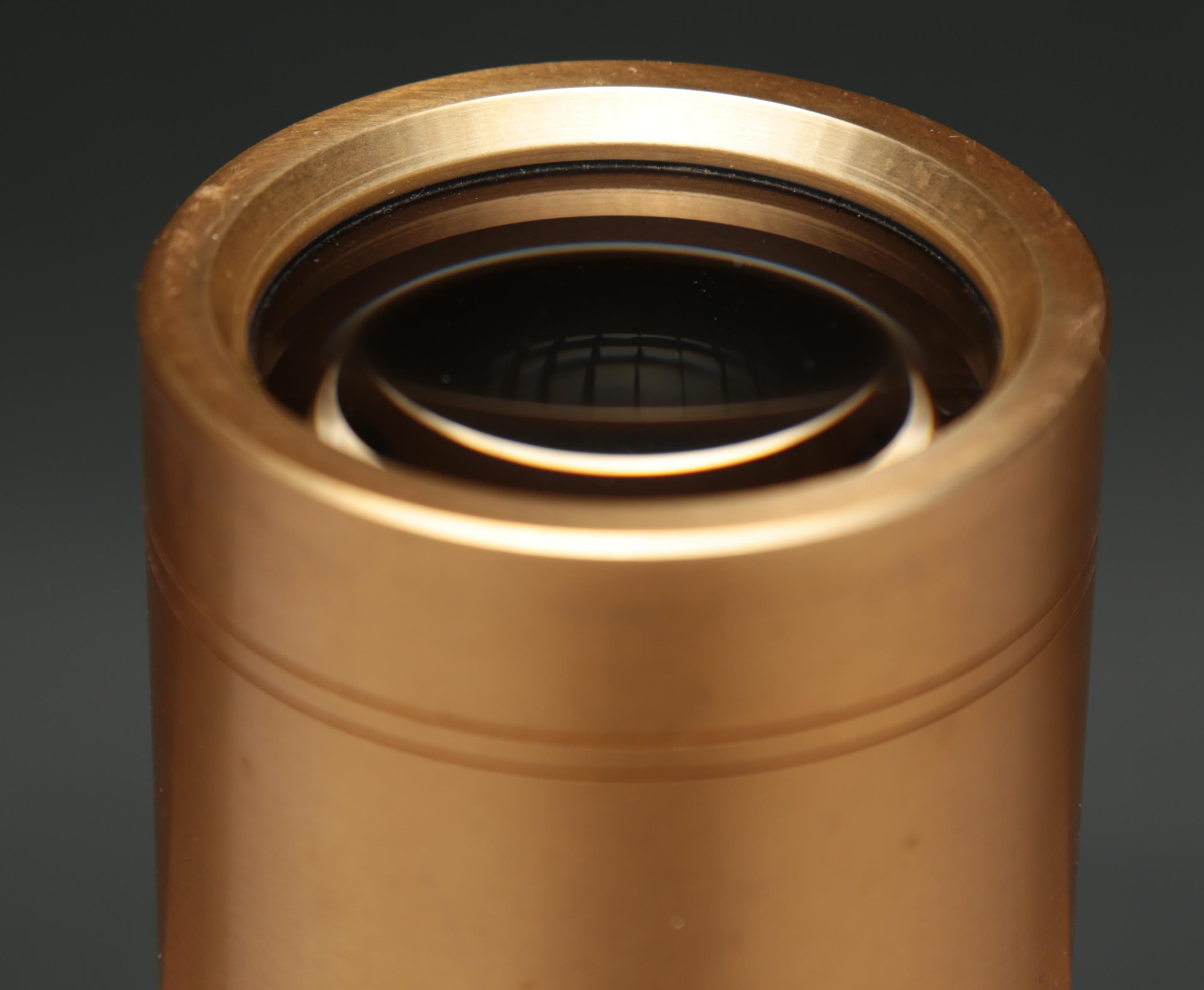
The clear, uncoated glass, will give the photographer a different look than a modern lens. That look can be beautiful, providing an almost dream-like quality to the shot. Also, there are artefacts that appear because a projection lens was not designed to focus an image on film, it’s designed to project the image from film onto a larger format, expanding rather than contracting.
I have fallen down the rabbit hole with these lenses; there is so much to learn! I might bid on one or two, but unless I win the lottery tonight, I’m going to need to reduce my photography-related purchases. Yes, that’s it, reduce my photography purchases…
Finally, here is a good video about adapting these lenses to your camera. I like this fellows delivery, he’s easy to follow. He also shows some examples of how his shots turn out. I have subscribed to his channel. Enjoy!
<iframe width="560" height="315" src="
title="YouTube video player" frameborder="0" allow="accelerometer; autoplay; clipboard-write; encrypted-media; gyroscope; picture-in-picture; web-share" referrerpolicy="strict-origin-when-cross-origin" allowfullscreen></iframe>
This is all so fascinating, in fact after I get my cataract surgery I might go back to using my old Canon instead of just my cell phone camera.
Fascinating!