
The Troops Live Under The "Canon's" Thunder
From Sindh, to Cooch Behar.

The auction that I work for was given a job to do by the executor of a local estate. The estate features a wide collection of militaria, including items from the mid 19th Century and into the early 20th Century.
Because of the unique nature of these items, I decided that I would shoot them with a different lighting scheme than I usually employ.
I got snoots!
What is a Snoot, you ask? A snoot, is a conical device that focuses the light from my strobe into a smaller circle. My snoots, looks like this:
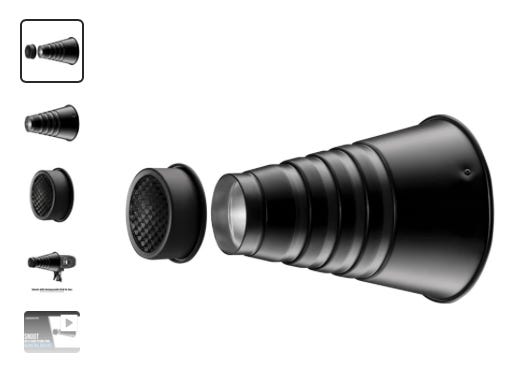
All of the pictures that I will show you were shot with two strobes, using these snoots (with the grids on the ends.
I decided to use snoots, rather than my usual soft boxes, because I wanted to isolate the light and try to illuminate only the object, and little of the surroundings.
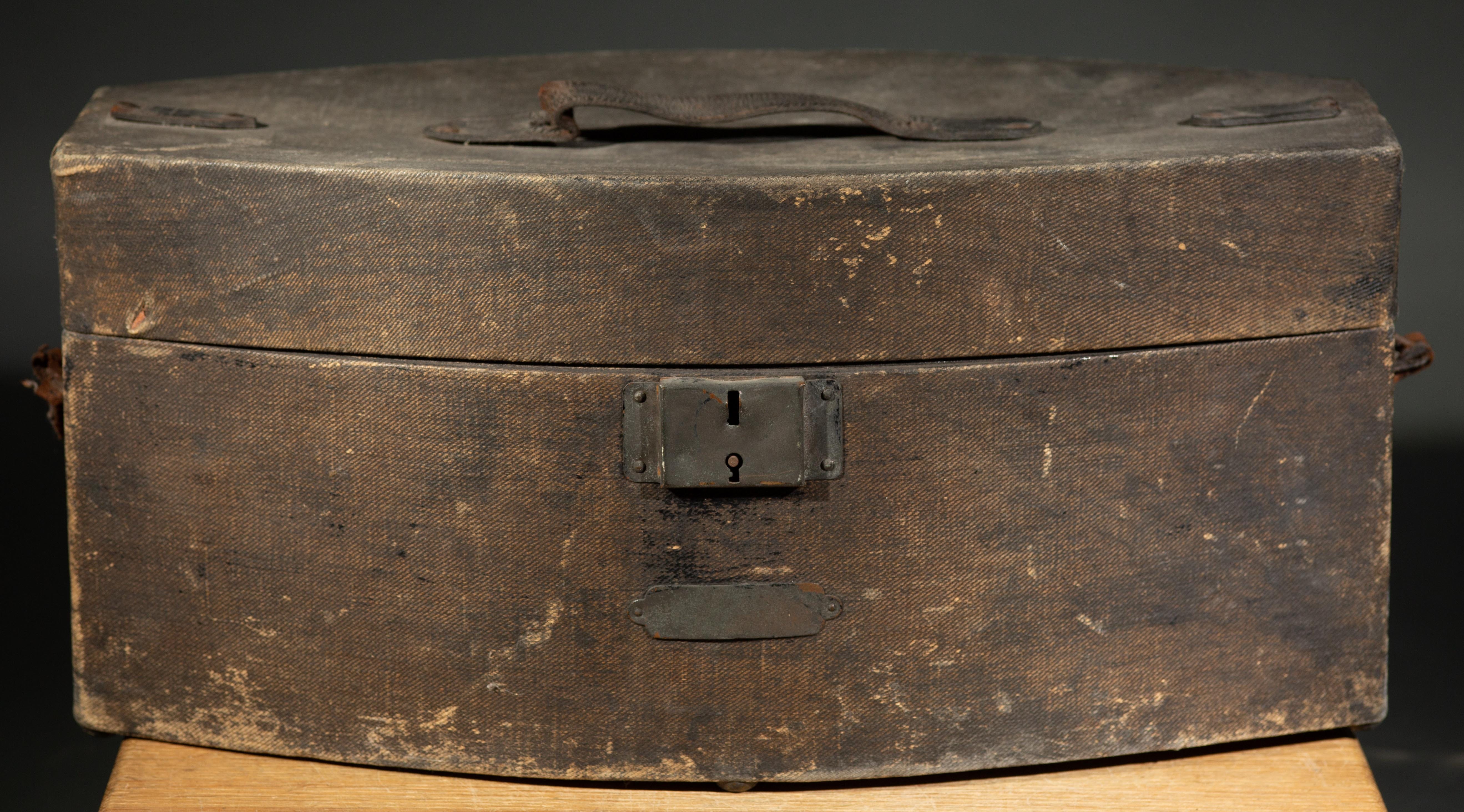
This, is a hatbox. Specifically, it is a hatbox for a naval officer in the U.S. Navy, around the time of the American Civil War. You will notice that the light that falls on the box is a hard light, and not the softened light that you typically see in my work; that is because there is no diffusion on the strobe, only the snoot. This harder light gives these pictures a much different character than what I usually get, and that’s the reason why I got the snoots.
Diffusion, tends to scatter the light, allowing it to reach into corners, making shadows softer and less pronounced. Diffusion also tends to mute the sparkle that comes from reflective surfaces, which is my preferred look, but I wanted a sharper, harder look for these objects, so again, the snoots.
The box has manufacturer markings from Germany. I have not been able to dig into the history of this type of hat enough to know with certainty, but my guess is, U.S. naval officers might look to buy their dress hats from the best milliner’s, and perhaps the best bicorn hats for navy officers, came from Germany? That would be my guess, at this point.
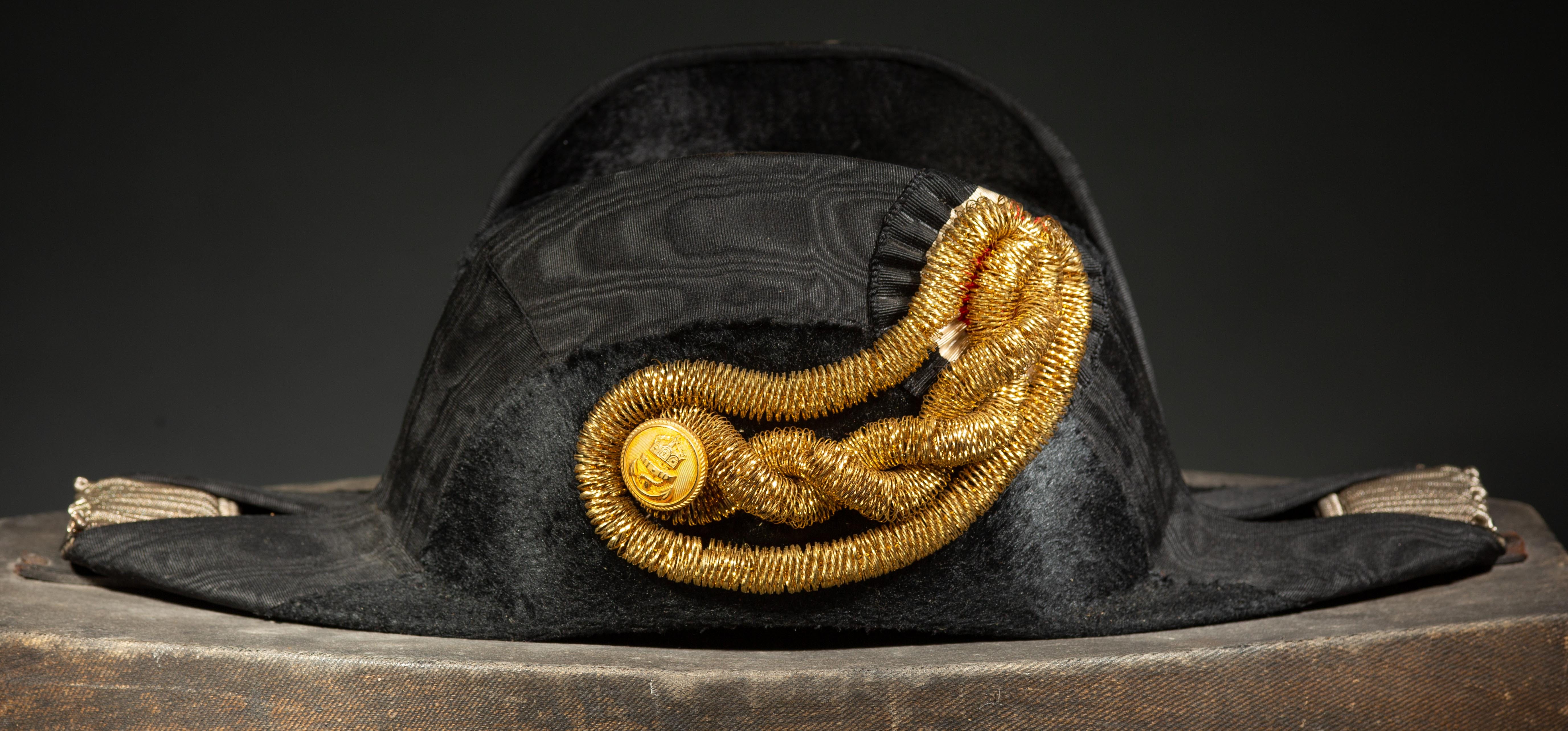
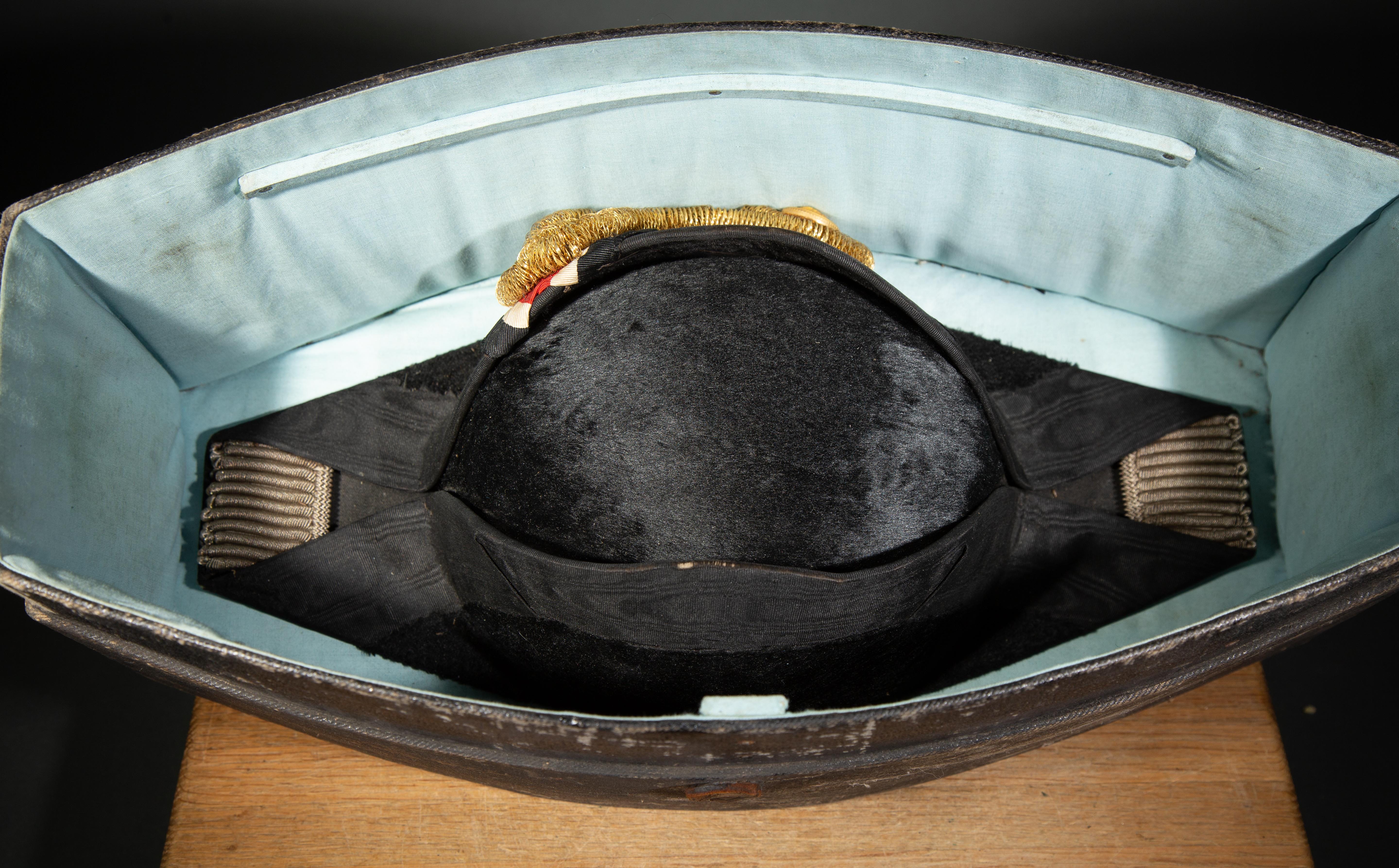
The hat is in remarkably good condition. It looks as though it was a hat used for formal occasions, so my guess is, it didn’t get much use. I am assuming that this hat is made from Beaver, but I am not certain. I do know that this hat is too small for me.
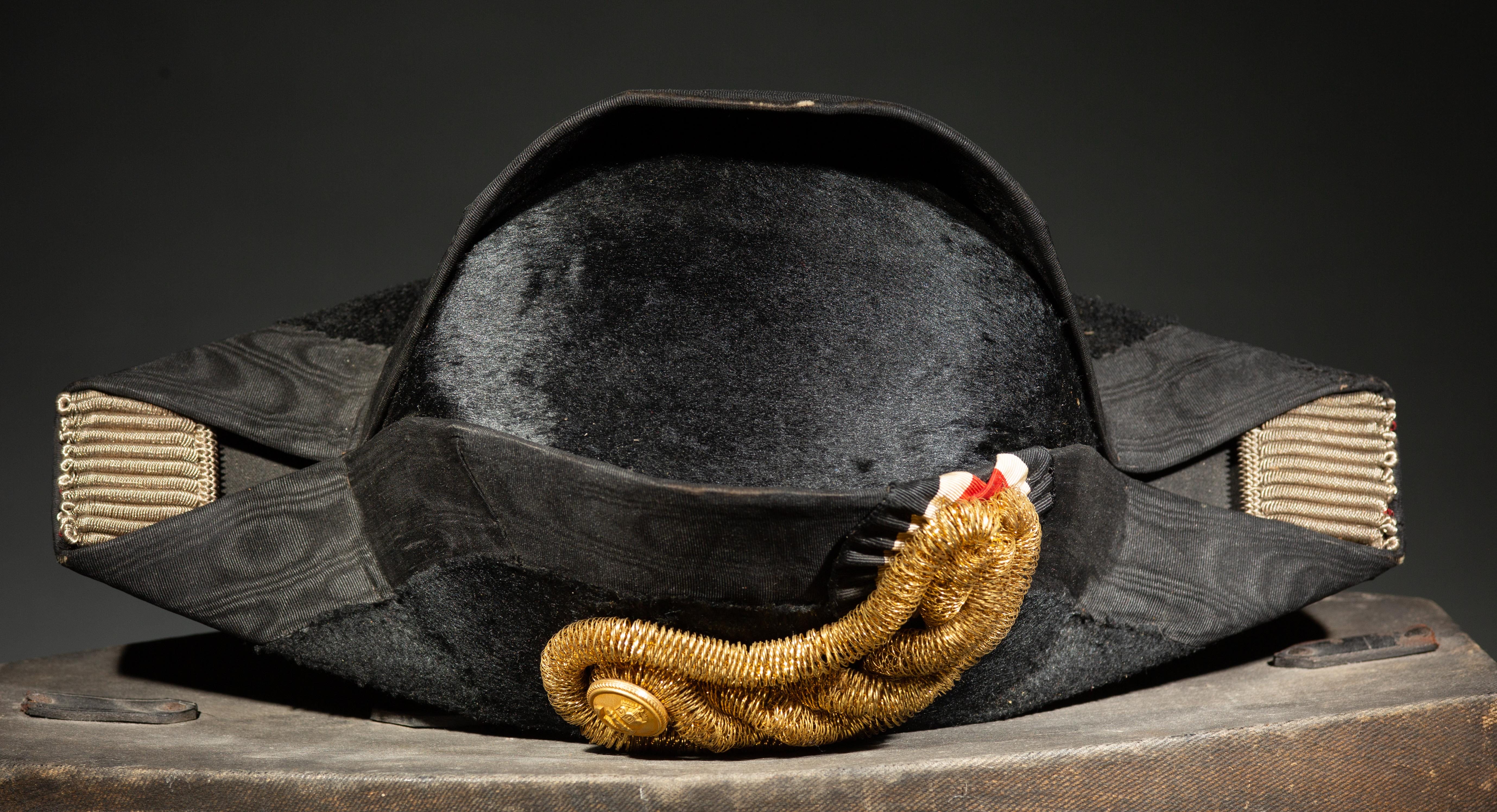
You can see the specular highlights reflecting on the shiny parts of this hat; this is exactly the look that I was going for.
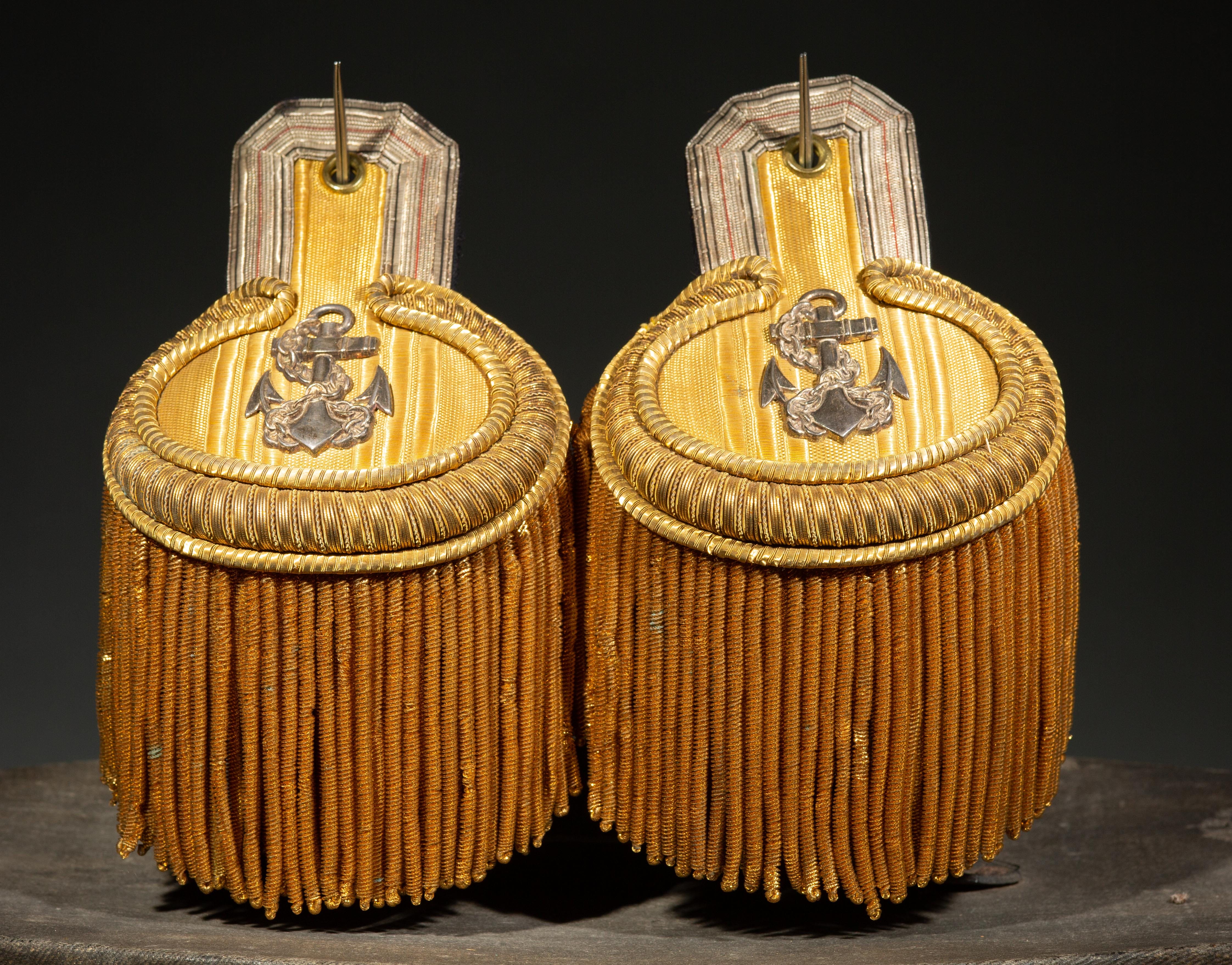
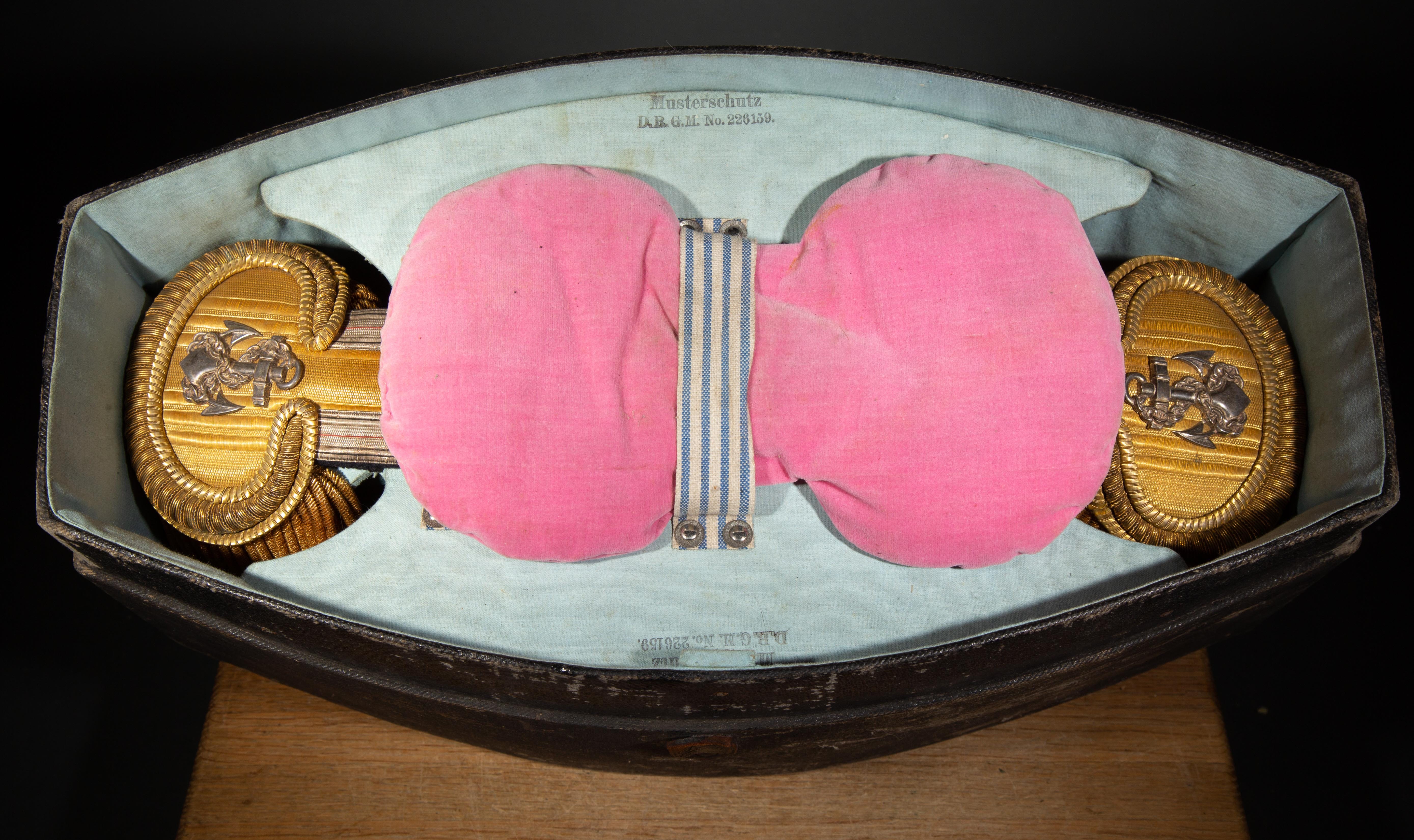
The hat came with these ridiculously over-the-top epaulettes, but look at how good the condition is for both! I suppose, that if you are standing around a party, in your full-dress uniform, you might want to look as ostentatious as possible.
One of the other military hats that we have is this Prussian (at least I think that it’s Prussian) Pickelhaube.
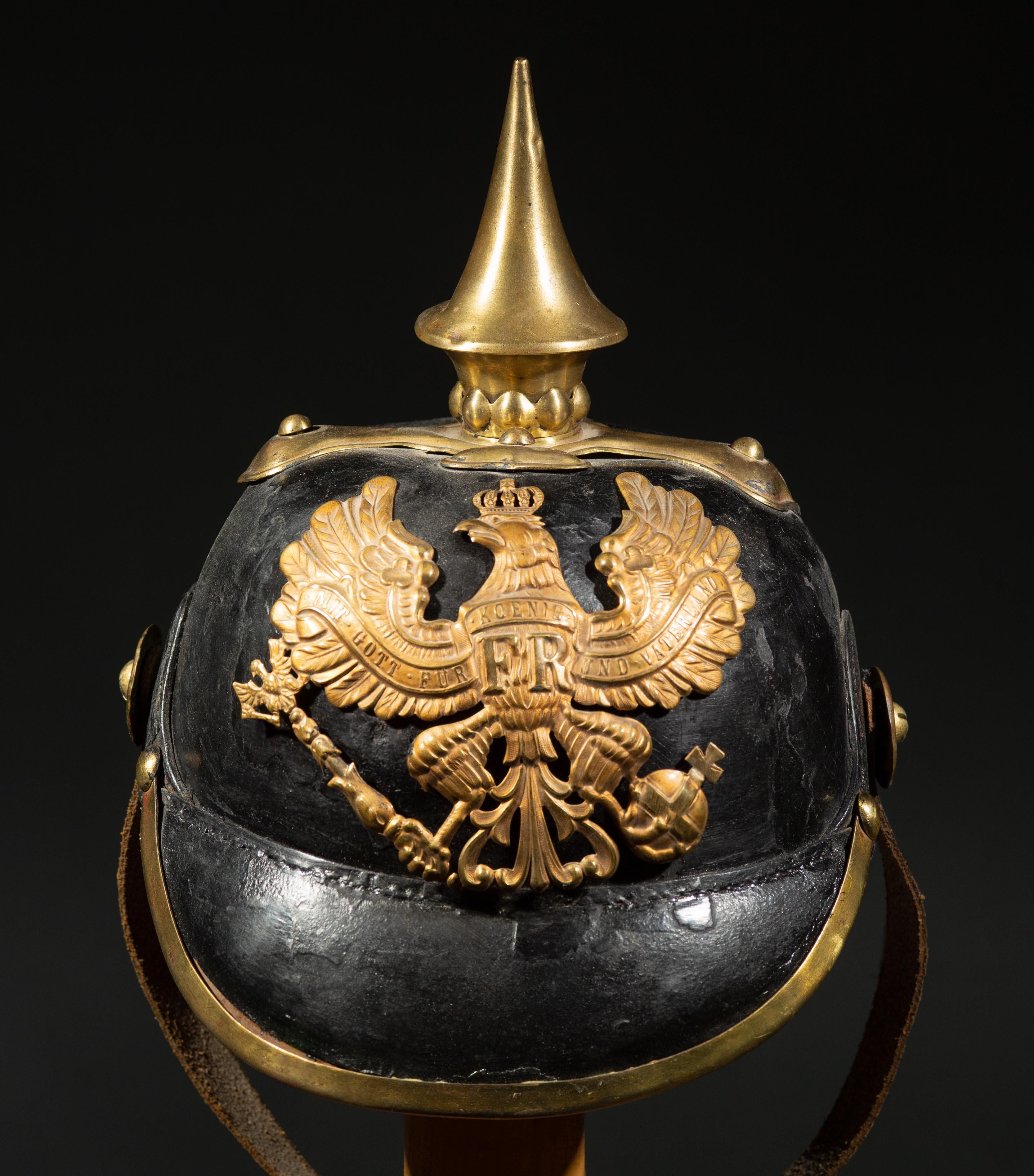
The Prussians, were the first to adopt this style of helmet, in 1842. It was originally a Russian design, but the Prussians put it into use two years before the Russians got theirs into service. Again, I couldn’t tell you if this is Prussian, or not, but it is typical of military helmets of German-speaking countries in the 19th Century.
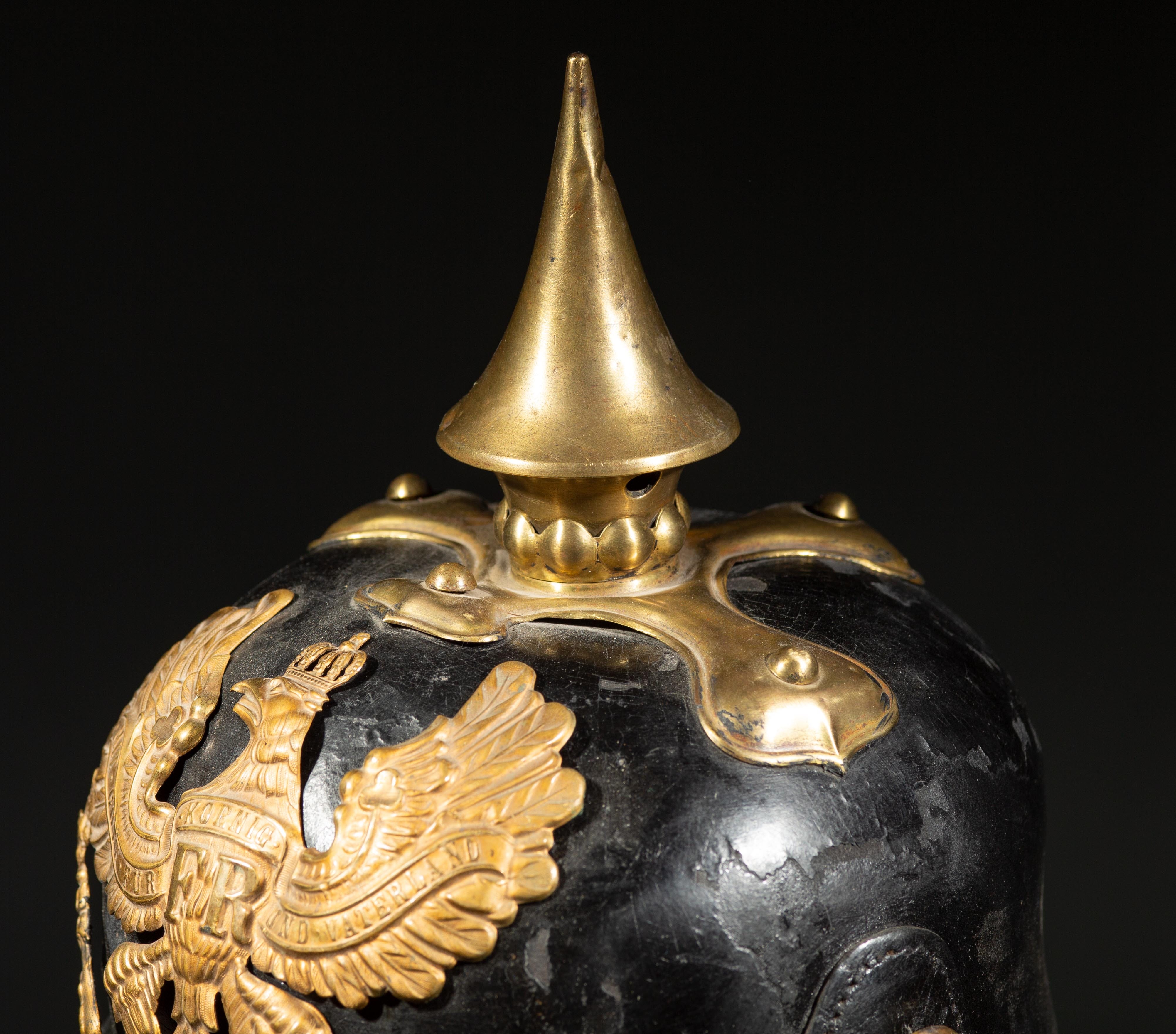
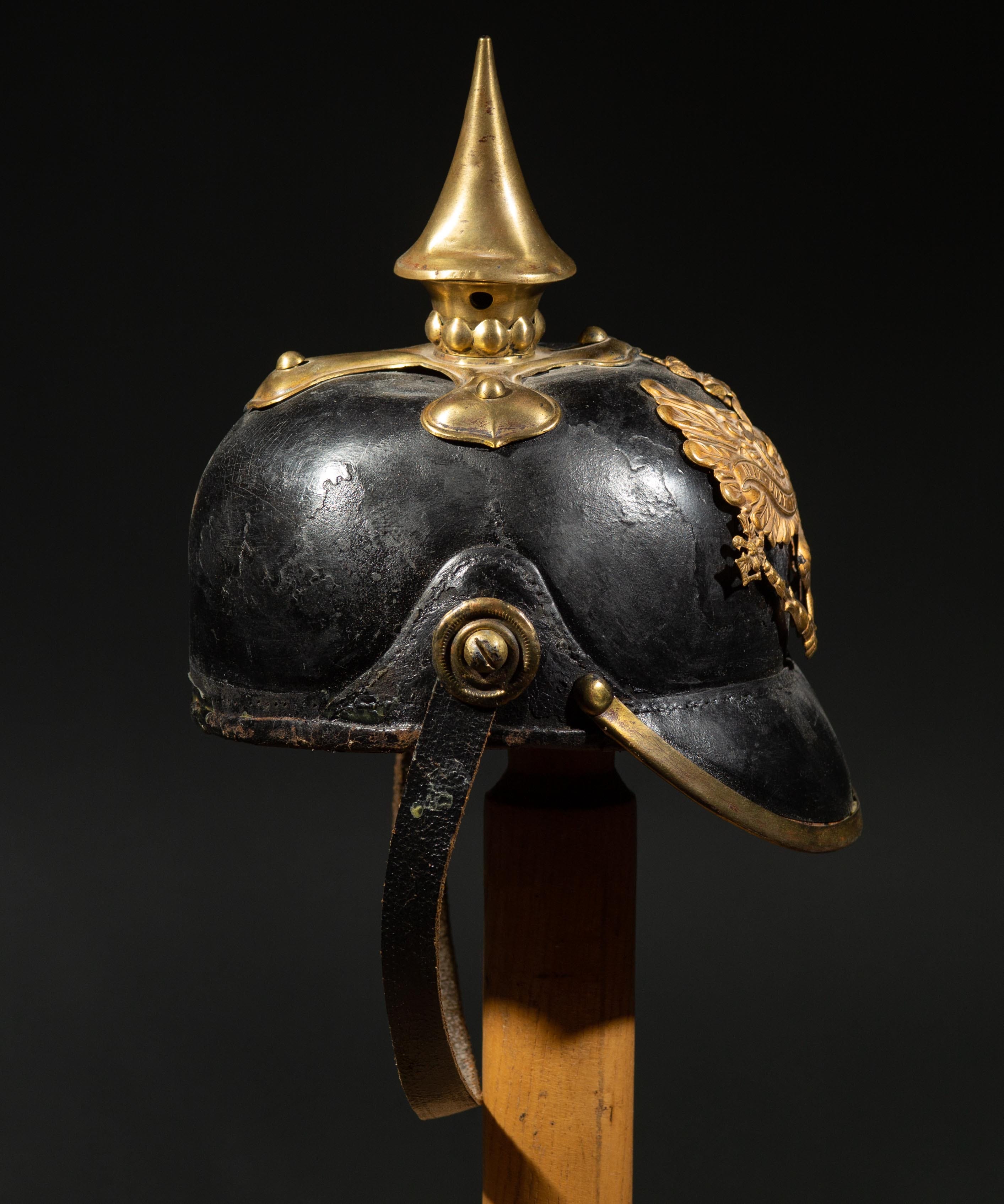
With this helmet, you can see what I was after, in terms of the lighting. The background is dark, and the object is lit. I was looking for a lighting scheme that looked similar to what you would find in a museum display.
I was wondering what the hotspots would look like, in this context, and I don’t mind them at all. Normally, I try to steer clear of hotspots, but I am not troubled by these. I do like the the texture that comes with this lighting design.
I also photo-stacked most of these Picklehaube, because they have so much detail. I wanted to make sure that you could clearly see the detail of the Eagle Crest from front to back.
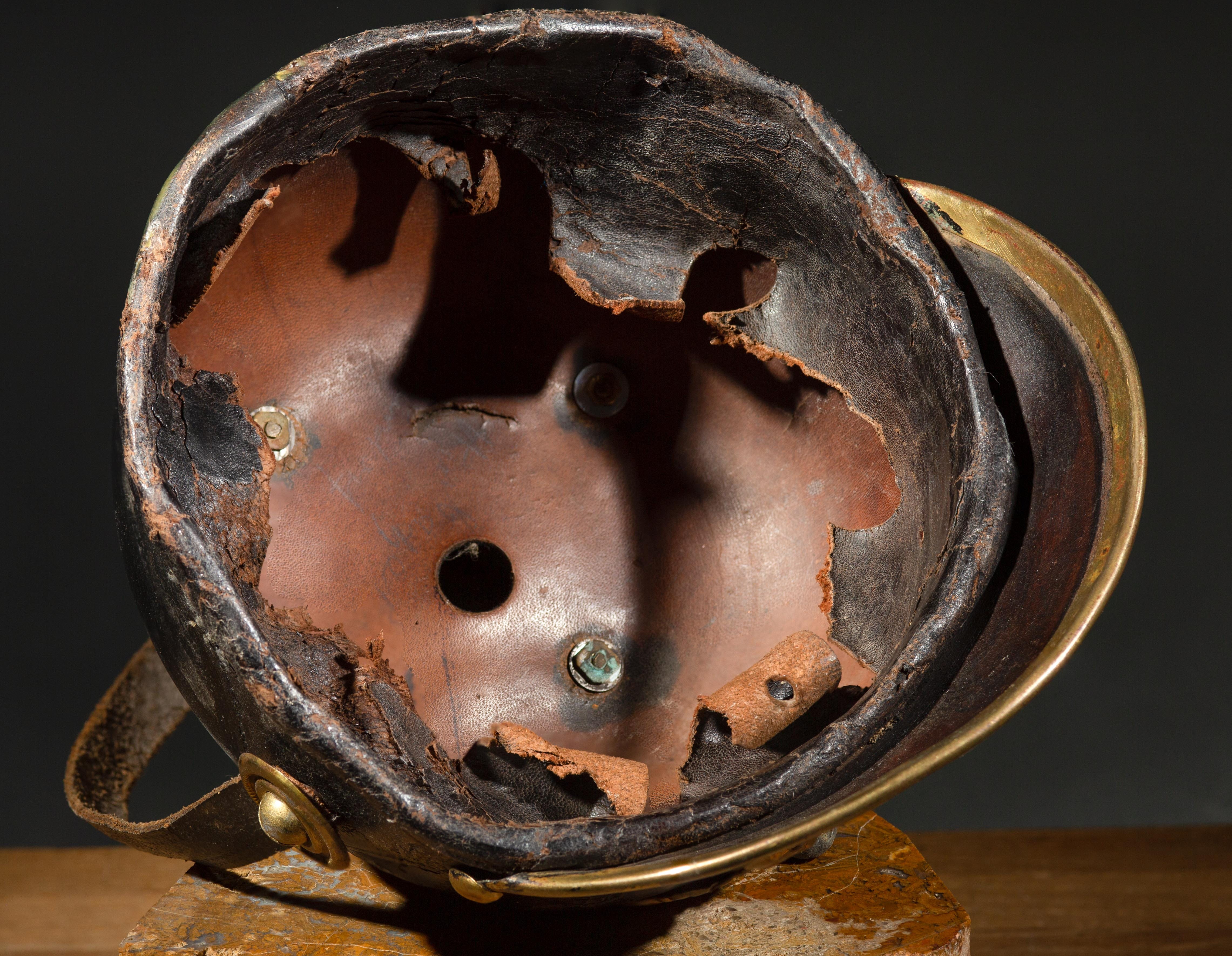
As I work my way through these helmets, I am very happy with my decision to change my lighting design, I think that the helmets look better like this.
I've said this before, I'll say it now. Your explanations of your lighting approach notwithstanding, you are collecting a veritable social history of human kind (the north american version) through the things its people collect. "No ideas but in things," William Carlos Williams intoned. You are collecting those ideas. I hope you can run with them some day soon.
when on earth did you discover snoots .. ? & when on earth might you discover fingers ?
‘slow pitch questions’ for an ‘old hand such as yerself .. from myself & a silly curveball question .. from an old school DOP like me .. so what’s the difference between the two on a Union film set ? I do hope your ‘wayback machine’s set on ‘stun / and not ‘strobe
(for readership only & not for you .. which might singe Darrin’s Fingers is a dead giveaway clue
🦎🏴☠️🎬)